
OPTİMA AZERBAIJAN
iiko Official Partner
200520-1
+994 12 310 26 27
+994 50 380 88 24
Request a call back
What happened in 2025 that led to technological leaps across so many fields? In particular, developments in AI stood out among the year’s innovations. In this blog, we review the key events enabled by AI advancements in 2025 — from OpenAI’s GPT-5 model to Google’s Gemini 3 platform, from Meta’s Llama 4 to NVIDIA’s chip records.
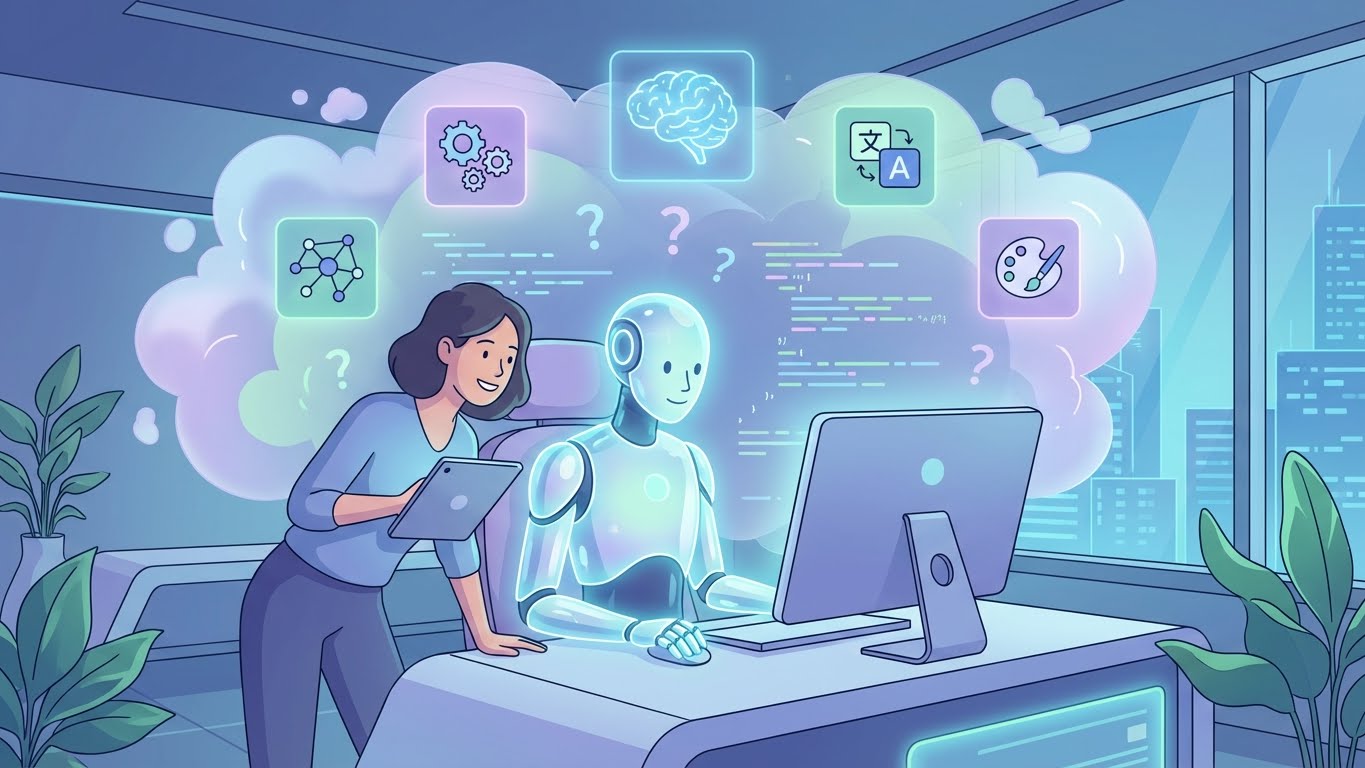
In August 2025, OpenAI introduced the GPT-5 model, marking a new stage in artificial intelligence with its built-in thinking capability and rapid iteration strategy. By the end of the year, GPT-5.1 and GPT-5.2 updates added new modes and further improved stability. As a result, ChatGPT evolved from a simple chatbot into an intelligent assistant capable of calling tools and executing tasks.
Key points to remember:
For OpenAI, 2025 became the year AI turned into a practical product ready for mass adoption.
In 2025, OpenAI’s Codex model evolved from a coding assistant into a full-fledged “code-writing agent.” Codex could understand a developer’s task, generate code, test it in a sandbox environment, and even prepare a pull request proposal for the repository. This innovation automated time-consuming tasks such as routine coding, fixing, and testing, significantly accelerating team productivity.
The core idea:
Productivity began to be measured not by writing more code, but by finding the right solution with fewer iterations.
In September 2025, OpenAI’s Sora 2 model brought generative video closer to mass adoption. Sora 2 enabled the creation of realistic graphics and synchronized audio video from short text prompts. This technology turned the idea of “creating clips with AI” into reality, from advertising videos to social media content.
Key highlights:
With Sora 2, a concept video clip could be produced in just a few minutes. However, the realism of such videos increased deepfake concerns, prompting discussions around watermarks and other ethical safeguards.
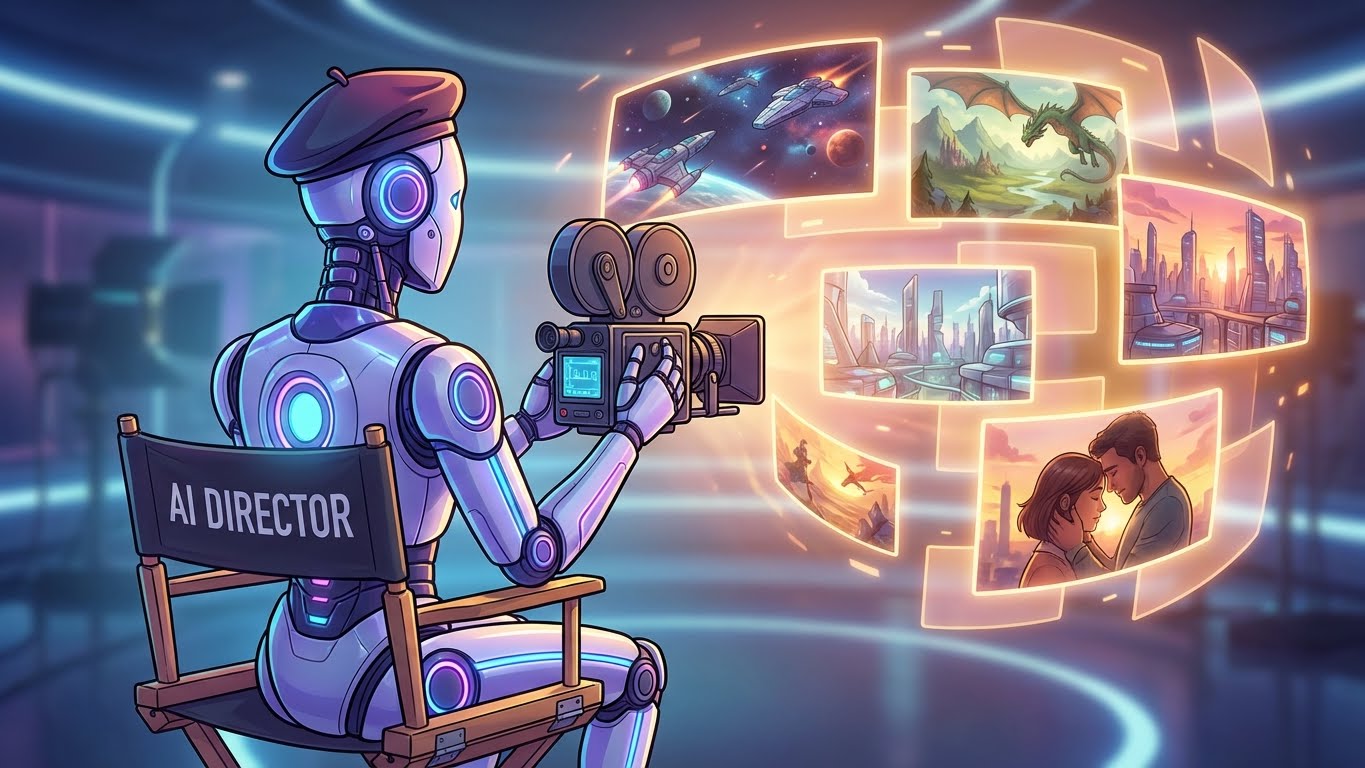
In May 2025, Google introduced Flow and Veo 3 together to systematize generative video production. Flow provided a workspace for creative users to build scenes, place objects, and define camera movements. Veo 3 was the AI model that transformed these scenarios into high-quality video.
What did Flow + Veo 3 change?
Thanks to Flow and Veo 3, the time from concept to finished video was significantly reduced in advertising and media. At the same time, ethical debates around authorship and originality of AI-generated videos intensified.
In October 2025, the ChatGPT Atlas browser was introduced, integrating AI directly into web browsing. The browser could understand webpage content and provide immediate assistance — summarizing articles, simplifying form filling, and comparing information across multiple sites.
Why this mattered:
As a result, the need to copy information from search engines into AI chatbots decreased. Although browser-level AI raised privacy questions, AI integration became the new norm in the browser competition of 2025.
In October 2025, the Pomelli platform realized the concept of an “AI marketing team” for small businesses. Pomelli analyzed a company’s website and materials, absorbed its brand DNA, and automatically generated marketing campaign ideas and assets aligned with that style.
Pomelli’s core ideas:
Through this approach, low-budget companies gained access to professional-level advertising content in a short time. Pomelli functioned almost like a digital marketing specialist by automating the marketing process. Naturally, transferring brand data to AI raised privacy concerns, but in 2025 such agent-based AI tools increasingly became part of everyday work.
In April 2025, Meta introduced Llama 4, an openly licensed large language model. This move reignited interest in open AI models. Llama 4 was released openly in several versions with broad multimodal capabilities.
Why did this make waves?
Because the model was openly accessible, thousands of developers fine-tuned it for their needs and integrated it into applications. Companies could build AI services on their own servers with their own data, reducing dependence on external vendors.
In November 2025, Meta introduced the SAM 3D algorithm, capable of creating a 3D model of an object or person from a single 2D image. This innovation represented a major step forward for augmented reality, e-commerce, and robotics.
For example, a simple product photo could be turned into an interactive 3D model, or a person’s image could be converted into a virtual 3D avatar. Meta released SAM 3D as open source, leading researchers to quickly produce numerous demos. Although the quality of single-image reconstructions was not yet perfect, 2025 marked significant progress in AI-driven 2D-to-3D reconstruction.
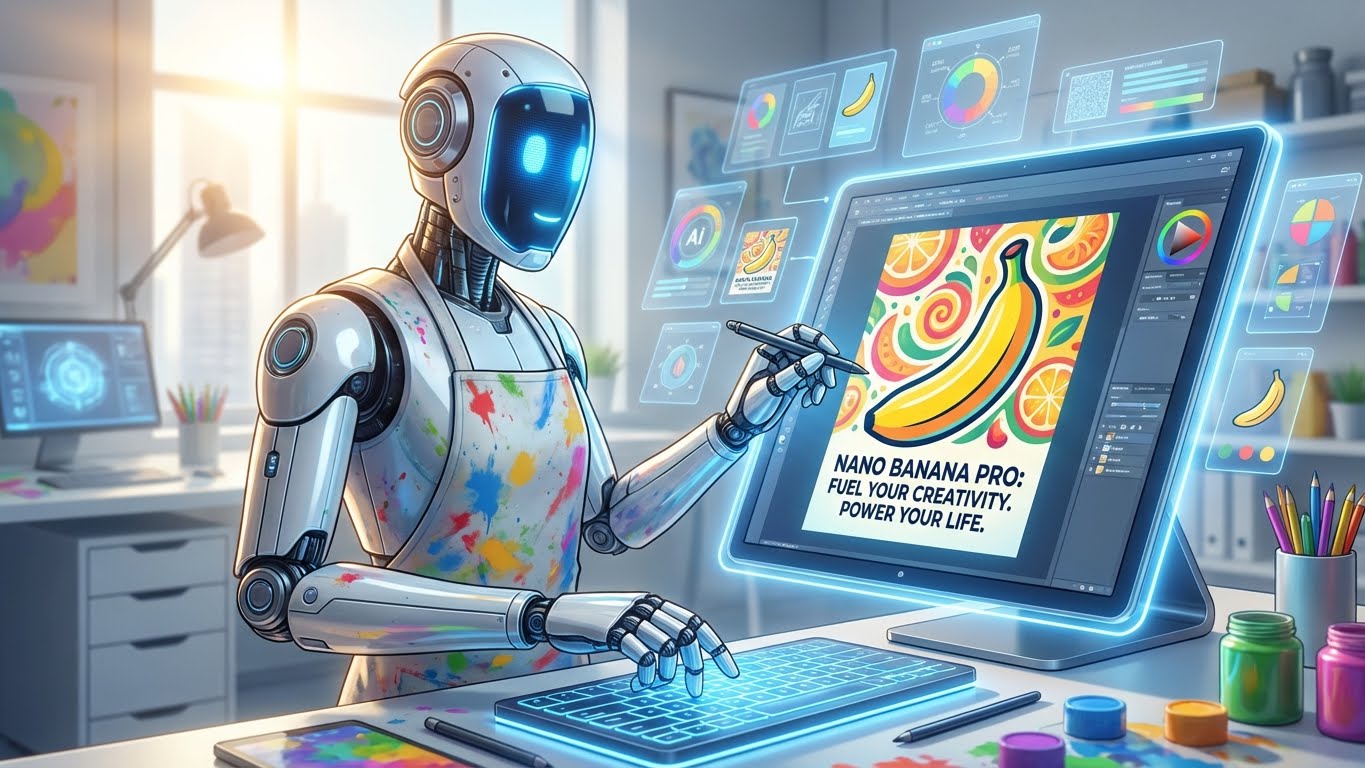
In November 2025, a generative model called Nano Banana Pro introduced an important innovation in design. The model addressed two major challenges in AI-generated images: accurate text rendering and finer user control over results.
Practical benefits:
With Nano Banana Pro, text in posters and banners became readable, and designers could define details such as style, color palette, and object placement through prompts. As a result, studio-quality visuals could be generated directly by AI.
In May 2025, Anthropic introduced the Claude 4 model. This version stood out for its ability to retain very long contexts, respond consistently, and break complex tasks into manageable steps. Claude 4 was also strong in coding and analysis.
What set Claude 4 apart:
The model could use external tools when needed, such as searching the internet or running code. In 2025, Claude 4 gained particular value in enterprises due to its reliability.
In February 2025, xAI introduced the Grok 3 model, focused on solving complex logical and mathematical problems. To support it, xAI built massive GPU clusters, betting on compute power in the AI race. By the end of the year, news of xAI building an “AI factory” with thousands of GPUs confirmed the trend of a compute arms race.
Why did Grok 3 attract attention?
Grok 3’s integration with Musk’s X platform (formerly Twitter) demonstrated how platform advantage could help AI reach a wide audience.
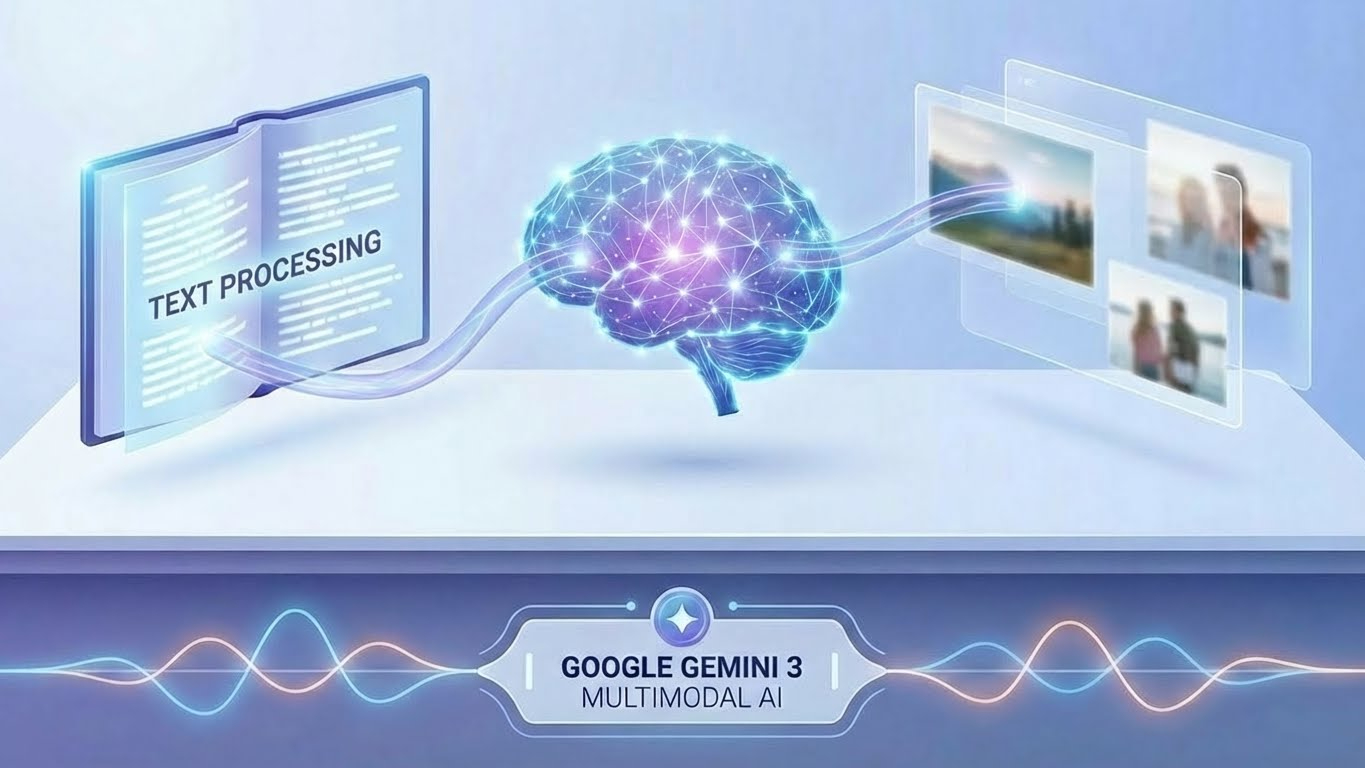
In November 2025, Google introduced Gemini 3, the next-generation language model. It stood out with strong reasoning capabilities and multimodal support (text, images, and audio together). From day one, Google integrated Gemini 3 into search, voice assistants, and cloud services to deliver smarter user experiences.
Key highlights of Gemini 3:
Gemini 3 featured a deep thinking mode for challenging tasks and could automatically use tools when needed. By positioning it as the central platform of its ecosystem, Google differentiated itself in competition with GPT-5 and other rivals.
One of the biggest winners of the AI boom in 2025 was NVIDIA. At the GTC 2025 conference, NVIDIA unveiled its new Blackwell-architecture GPU line and the “AI factory” platform. By mid-year, the company’s market capitalization reached historic highs.
Behind this rise:
Demand for NVIDIA chips became so high that meeting supply turned into a challenge.
Toward the end of 2025, the AI boom produced a hardware shortage as a side effect. Scarcity of HBM memory critical for GPUs and limits in chip packaging capacity slowed production and drove prices higher. In addition, U.S. export restrictions on advanced AI chips further tightened global supply.
In 2025, significant steps were taken in AI governance. The European Union began implementing the first provisions of the AI Act, including bans on certain high-risk AI practices and transparency requirements for large models. These decisions highlighted for companies the growing importance of compliance.
At the same time, key discussions included:
Meanwhile, Albania created a unique precedent in digital governance by appointing the world’s first virtual AI avatar as a “minister.” Thus, in 2025, both regulators and innovators demonstrated that AI is not only a technology issue, but also a governance one. Building a powerful model alone is not enough — ethical and transparent use is equally essential.
Beyond AI, 2025 was also marked by scientific discoveries. In Spain, archaeologists uncovered the oldest known human facial fossil in Western Europe, dating back approximately 1.2 million years, suggesting that human history in Europe began earlier than previously thought. In astrophysics, astronomers announced the discovery of one of the largest black holes ever observed — with a mass tens of billions of times that of the Sun — making headlines as a “record black hole.”
30-Dec-2025 508
You can get advice, clarify prices and order a solution from the specialists of iiko BUSINESS PARTNER AZERBAIJAN. Contact us by phone, e-mail or request a call back.