
OPTİMA AZERBAIJAN
iiko Official Partner
200520-1
+994 12 310 26 27
+994 50 380 88 24
Request a call back
Microsoft released security fixes for hundreds of vulnerabilities affecting Windows and several other products as part of its July 2026 Patch Tuesday update.
The update covered not only the Windows operating system but also Microsoft SharePoint Server, Active Directory Federation Services, Microsoft Defender, Dynamics 365, Exchange Server, BitLocker and several enterprise products.
The security release was described as one of the largest monthly updates Microsoft has published.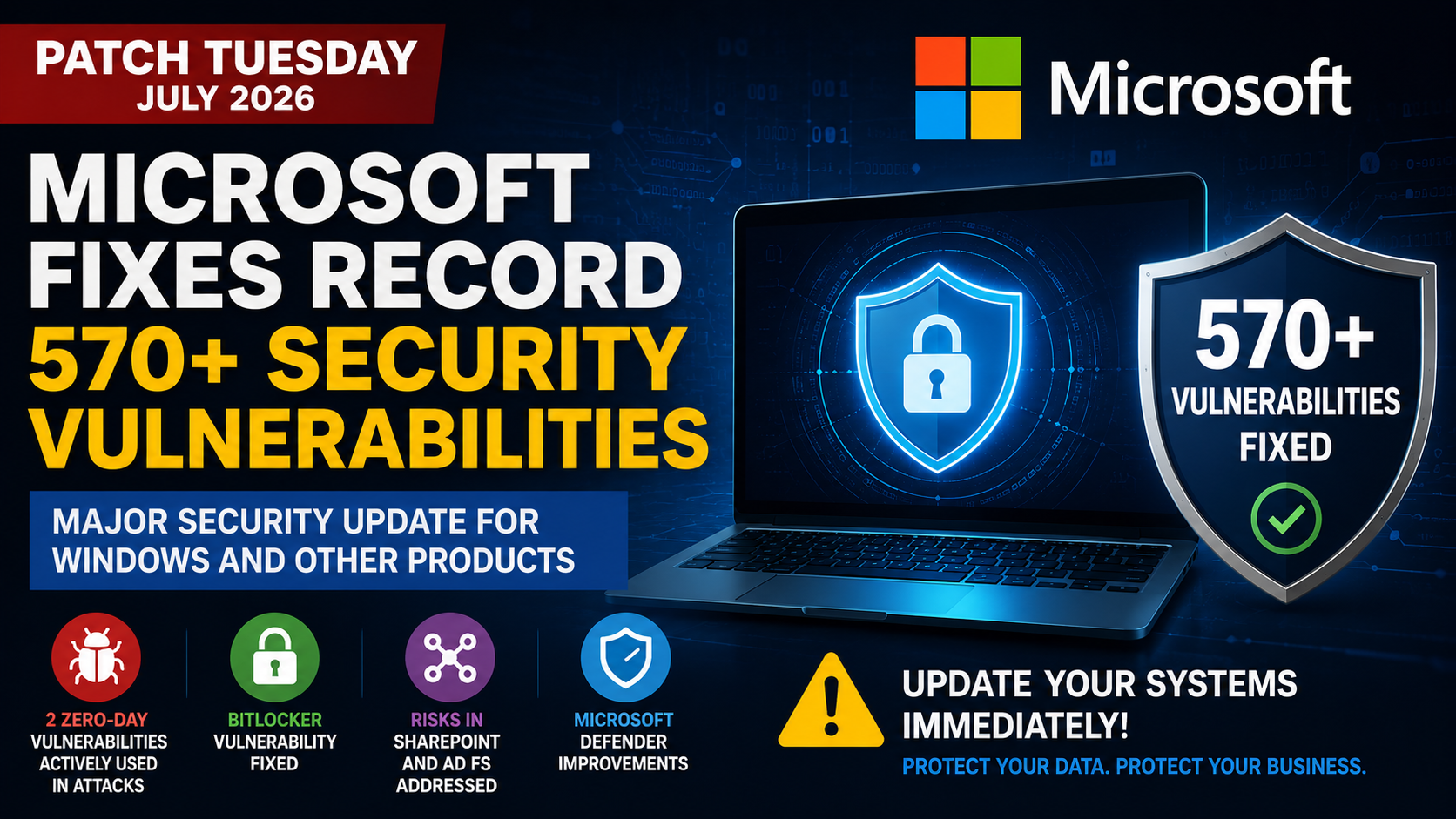
Some of the vulnerabilities were classified as critical.
The affected categories included remote code execution, privilege escalation, information disclosure, security feature bypass and denial-of-service vulnerabilities.
A remote code execution vulnerability may allow an attacker to run malicious code on a targeted system through a specially crafted file, request or network connection.
Privilege escalation vulnerabilities may allow a user with limited access to gain administrator-level permissions.
The update also addressed vulnerabilities reportedly exploited in real-world cyberattacks.
A zero-day vulnerability is a security weakness that is known to or used by attackers before the software developer releases an official fix.
These vulnerabilities are particularly dangerous because organizations may still be exposed when attacks begin.
Some of the vulnerabilities reportedly affected enterprise services such as Active Directory Federation Services and Microsoft SharePoint Server.
Microsoft SharePoint is widely used by organizations to store documents, share files and enable collaboration between employees.
Security vulnerabilities in SharePoint may allow unauthorized attackers to access systems, obtain elevated permissions or reach confidential company information.
Microsoft advises system administrators to install the official security updates and enable additional security scanning features where available.
However, additional protection tools should not be considered a replacement for installing the official patches.
The update also included fixes for security vulnerabilities affecting BitLocker drive encryption.
BitLocker protects information stored on Windows devices by encrypting the contents of the drive.
A vulnerability in this technology could potentially allow an attacker with physical access to a device to bypass certain protections and access encrypted files.
This risk is particularly significant when a business laptop is lost or stolen and contains customer information, financial documents, passwords or confidential corporate files.
Microsoft released security patches for vulnerabilities affecting Microsoft Defender and the Microsoft Malware Protection Engine.
Some issues could potentially allow code execution when a specially crafted malicious file is opened, scanned or processed by the system.
Because Microsoft Defender is used as the default security solution on many Windows devices, these fixes are important for a large number of users.
Microsoft uses artificial intelligence-based tools to help detect and analyze security vulnerabilities.
AI systems can review large amounts of software code, identify suspicious sections and highlight potential security risks for researchers.
Therefore, an increase in the number of reported vulnerabilities does not necessarily mean that software has suddenly become less secure. It may also indicate that security flaws are being discovered more efficiently.
However, artificial intelligence can also be used by cybercriminals to create phishing messages, analyze software systems and automate attacks.
Windows users can check for updates by opening Settings, selecting Windows Update and clicking “Check for updates.”
After the update is downloaded and installed, the device may need to be restarted.
Businesses and system administrators should also consider the following actions:
After a security update is published, attackers can analyze the patch and identify which parts of the software code were changed.
This information may help them understand how the original vulnerability worked and create attacks targeting systems that have not yet been updated.
For this reason, the first days and weeks following the release of a security update may be especially risky.
Organizations that delay patching may remain exposed to attacks even though an official fix is already available.
Microsoft’s July security update addressed a large number of vulnerabilities affecting Windows and other enterprise products.
The update reduces risks related to remote code execution, privilege escalation, information disclosure, BitLocker protection bypasses and unauthorized access to SharePoint systems.
Both individual users and organizations are advised to check the update status of their Windows devices and Microsoft products and install important security patches without unnecessary delay.
24-Jul-2026 70
You can get advice, clarify prices and order a solution from the specialists of iiko BUSINESS PARTNER AZERBAIJAN. Contact us by phone, e-mail or request a call back.