
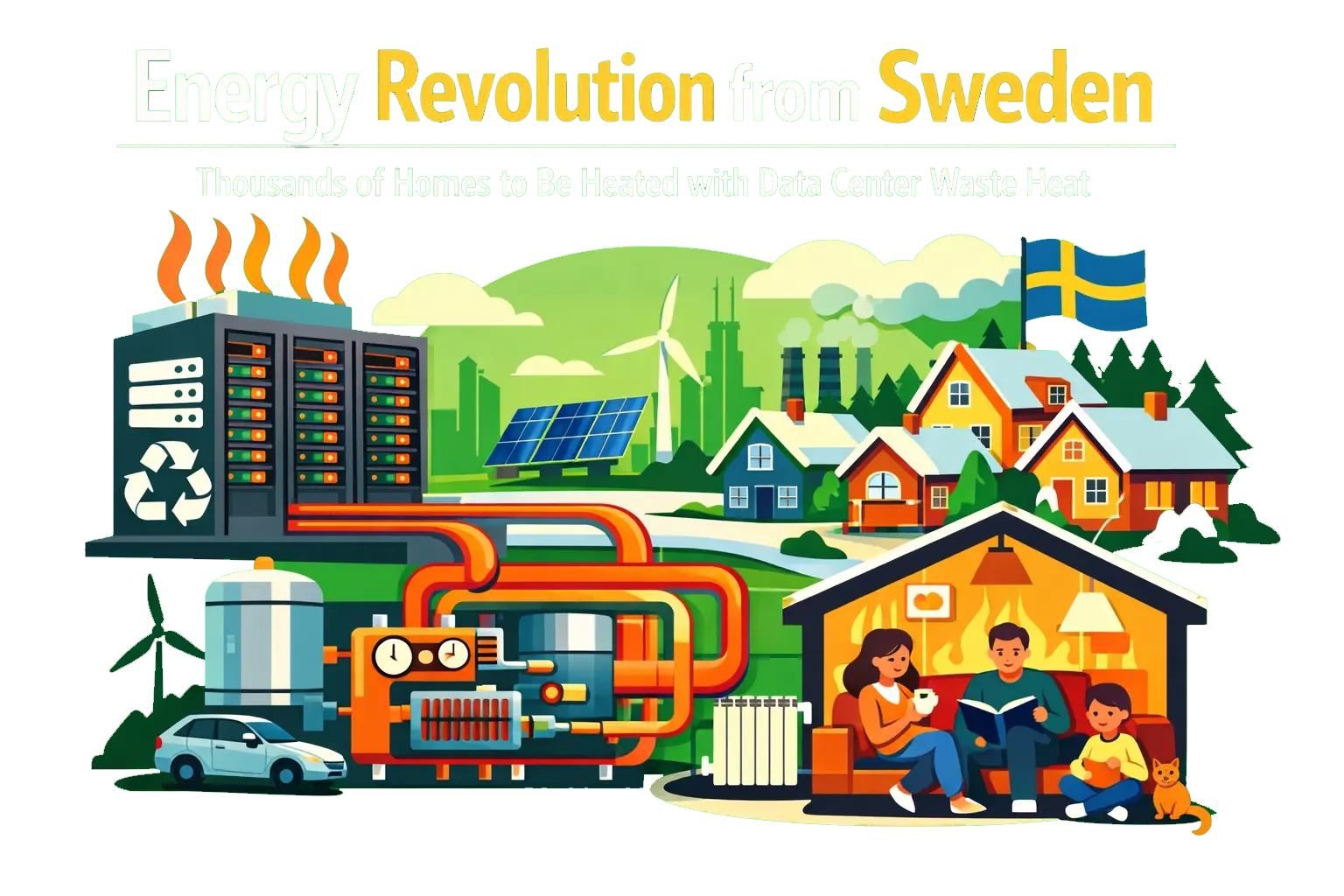
Energy Revolution from Sweden: Thousands of Homes to Be Heated with Data Center Heat
Behind our digital world lies a vast physical infrastructure: Data Centers. Every time we watch a video, ask a question to artificial intelligence, or share a photo on social media, servers are operating and generating large amounts of heat. Normally, this heat is released into the air as “waste” and requires additional energy for cooling systems. However, Sweden is completely changing this paradigm. Within the Stockholm Data Parks project, excess heat generated by servers is recycled and directed into the city’s central heating system, warming thousands of homes.

From Digital Waste to Thermal Energy
The Swedish model is not only a technological innovation but also a perfect example of the circular economy. This process optimizes traditional energy consumption in the following ways:
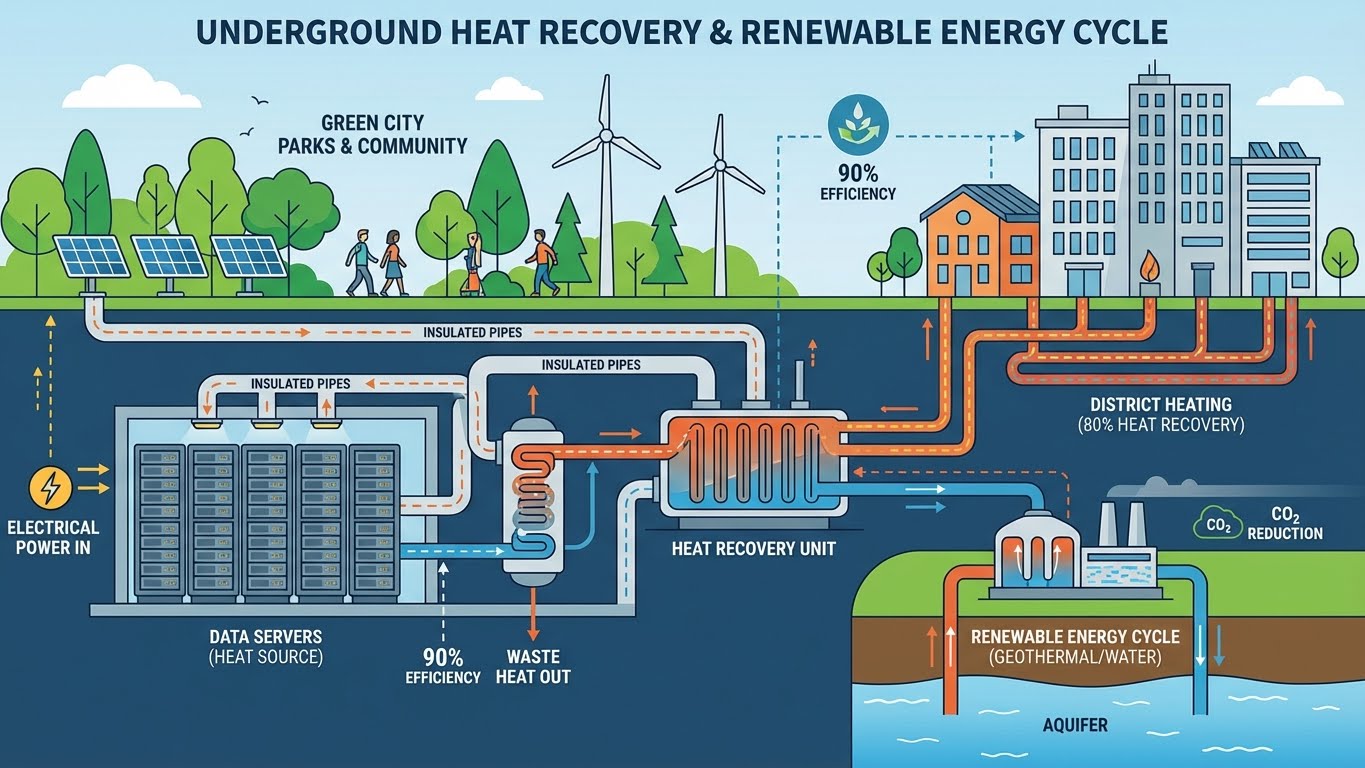
- Heat Recovery: Servers in data centers can reach temperatures of up to 85°C during operation. The hot air or water produced during cooling is transferred to the city’s water network through heat exchangers instead of being released directly into the atmosphere.
- Dual Efficiency: Instead of spending energy to cool themselves, data centers generate revenue by selling heat. Meanwhile, the city receives ready-to-use heat without burning gas or coal.
- Impact on Carbon Footprint: This approach significantly reduces the need for fossil fuels in the city’s heating system. For example, Stockholm aims to become completely free of fossil fuels by 2040, and this project is at the center of that goal.
Global Impact and Statistical Indicators
Numbers clearly demonstrate the scale of this innovation. Sweden’s approach is evolving from a small experiment into a global energy model:
- Heat Volume: Currently, approximately 10% of Stockholm’s district heating demand is supplied by heat recovered from data centers and industrial excess heat. This is equivalent to heating around 30,000 modern apartments.
- Energy Savings: By optimizing cooling costs, data centers achieve up to 40% efficiency gains in overall energy consumption.
- Market Value: The global Waste Heat Recovery market is projected to exceed $90 billion by 2028.
Development Timeline and the Future
This integration of energy and technology is developing in stages:
- 2017 (Beginning): The official launch of the Stockholm Data Parks project. The goal was to attract major technology companies to the city and encourage them to share their heat.
- 2023–2024 (Expansion): Integration of heat from Microsoft and other major companies’ facilities in Sweden into the heating network. With the growth of artificial intelligence, energy consumption and generated heat increased significantly.
- 2030 (Standardization): It is expected that heat recovery will become a mandatory standard for all newly built large data centers in the European Union.
Application Opportunities for Azerbaijan
The Swedish experience is particularly relevant for Azerbaijan. Against the backdrop of the country’s transition to green energy and hosting global events such as COP29, this technology opens new perspectives:
First, during the modernization of central heating systems in Baku and other major cities, this model can be taken into account. Digitalization is accelerating in the country, and new data centers (for example, within the “Government Cloud” project) are being established. Using the heat from these centers to warm nearby public buildings or greenhouses could make a real contribution to reducing gas consumption.
Second, alongside Azerbaijan’s renewable energy potential, taking such innovative steps in the field of energy efficiency can further enhance the country’s technological image.
Heating homes with data centers is not just an engineering achievement—it is the urban model of the future. Sweden proves that technological progress does not have to harm nature; on the contrary, we can transform our digital waste into physical comfort. “Cloud” technologies, in the literal sense, are bringing warmth into our homes.