
How AI Chatbots Are Transforming Our Daily Lives and Businesses
With the rapid advancement of artificial intelligence technologies, the concept of the “chatbot” has evolved far beyond simple question-and-answer tools. What once served only to handle basic customer inquiries has now become an integral part of our everyday lives. Today’s AI chatbots perform complex analyses, generate creative content, and actively support decision-making at both individual and corporate levels. AI chatbots are not just another technological trend—they represent a new culture in how we manage time, work, and information.
Changes in Everyday Life
Artificial intelligence–powered chatbots (such as ChatGPT, Claude, and Gemini) have effectively become personal assistants in our pockets. This technology is reshaping daily routines in several key ways:
- Personal Learning and Education: Chatbots now act as personal tutors. Users rely on these tools to learn new languages, simplify complex scientific articles, or explore historical topics in an interactive manner. As a result, education becomes more accessible, personalized, and flexible for everyone.
- Creative Support: For writers, designers, and content creators, the concept of “creative block” is gradually disappearing. AI chatbots function as idea generators, assisting with everything from brainstorming blog topics to drafting social media captions and marketing copy.
- Planning and Organization: Time-consuming tasks such as creating travel itineraries, preparing weekly meal plans, or managing personal budgets can now be completed in seconds. This allows individuals to focus their time and energy on more meaningful and productive activities.
A Revolution in the Business World
For businesses, AI chatbots are no longer a “nice-to-have” feature—they have become a necessity for maintaining competitiveness. Companies are deploying chatbot solutions across several critical areas:
- 24/7 Customer Support: Without the need for human agents, chatbots can respond to customer inquiries at any time of day. This significantly improves customer satisfaction while reducing operational costs.
- Data Analysis and Forecasting: Thanks to their ability to process large volumes of data, AI chatbots can identify sales trends and provide actionable insights for marketing and strategic planning.
- Automated Workflows: Routine office tasks such as writing reports, responding to emails, and summarizing meeting notes are increasingly automated. This frees employees to concentrate on strategic thinking and creative problem-solving.
Statistics and Real-World Impact
Numbers clearly illustrate the growing influence of AI chatbots on business performance:
- Cost Reduction: Studies show that chatbot implementation has helped reduce global customer service costs by up to 30 percent.
- Response Speed: Compared to traditional call centers, AI-powered systems can process and resolve customer requests 5 to 10 times faster.
- User Adoption: Recent surveys indicate that over 60 percent of consumers prefer interacting with chatbots over human operators for simple inquiries.
Development Timeline and the Future Ahead
The evolution of AI chatbots has been remarkably fast. This progress can be summarized through a brief timeline:
- 2023: The explosive rise of generative AI, with early versions of ChatGPT capturing global attention. At the time, many viewed these tools as little more than text-generating novelties.
- 2024: The multimodal era. Chatbots learned to see, hear, and speak, and businesses began integrating AI through APIs into their workflows.
- 2026 and Beyond: The age of AI agents. In the near future, chatbots will not only communicate with users but also take action on their behalf. Instead of asking an assistant to “find a hotel,” the system will locate options within your budget, make the reservation, and confirm payment automatically.
Accessibility and Adoption in Azerbaijan
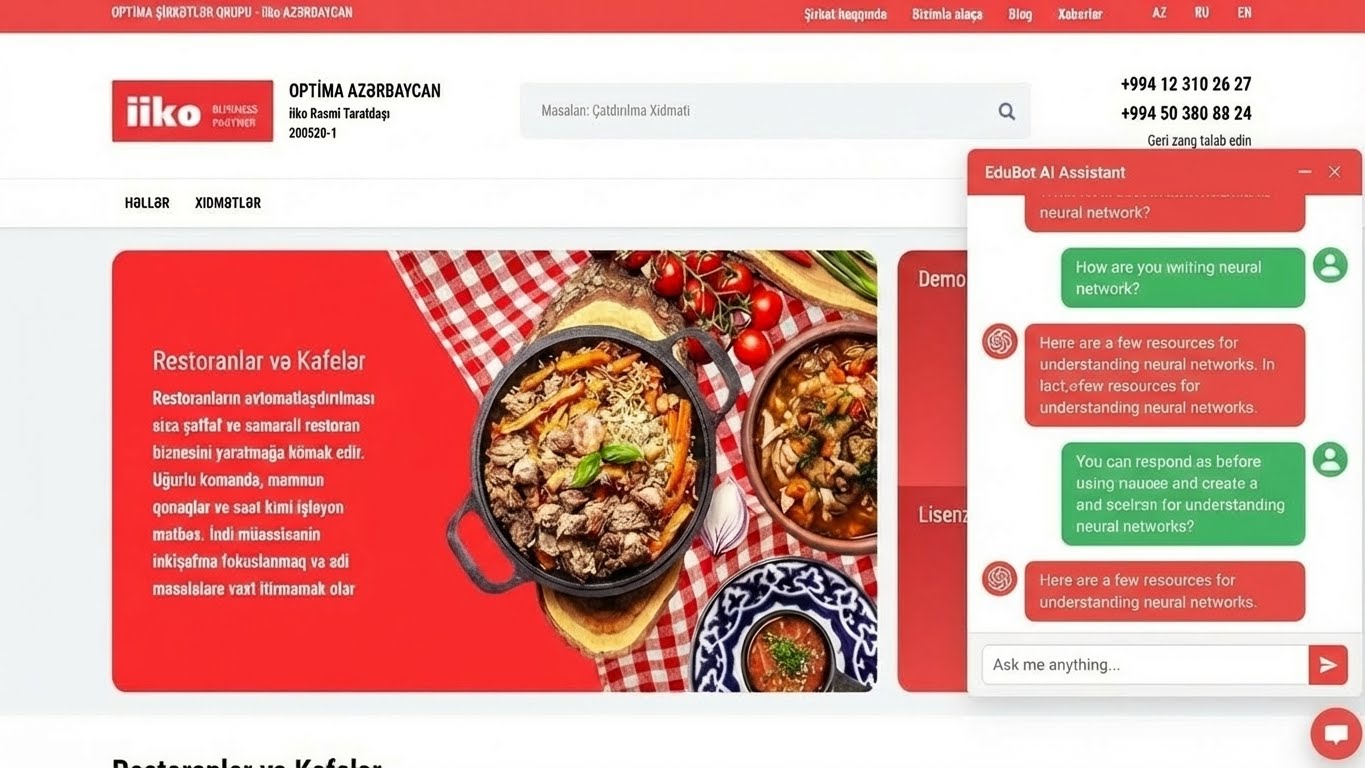
This global transformation is also reaching Azerbaijan. Many local banks, telecommunications providers, and government institutions have already integrated AI-powered chatbots into their platforms. At the same time, local startups are leveraging OpenAI and Google APIs to build Azerbaijani-language solutions tailored to domestic users.
Encouragingly, global AI models such as GPT-4o and Gemini 1.5 are becoming increasingly proficient in understanding and generating Azerbaijani-language content. This removes language barriers and enables local businesses to adopt world-class technology more easily.
Conclusion
AI chatbots are no longer a technology of the future—they are a reality of today. Whether for personal development or business growth, those who effectively adopt and integrate these tools will gain a significant competitive advantage. For business leaders, the key is to view chatbots not as replacements for human employees, but as strategic partners that enhance team capabilities and overall efficiency.