
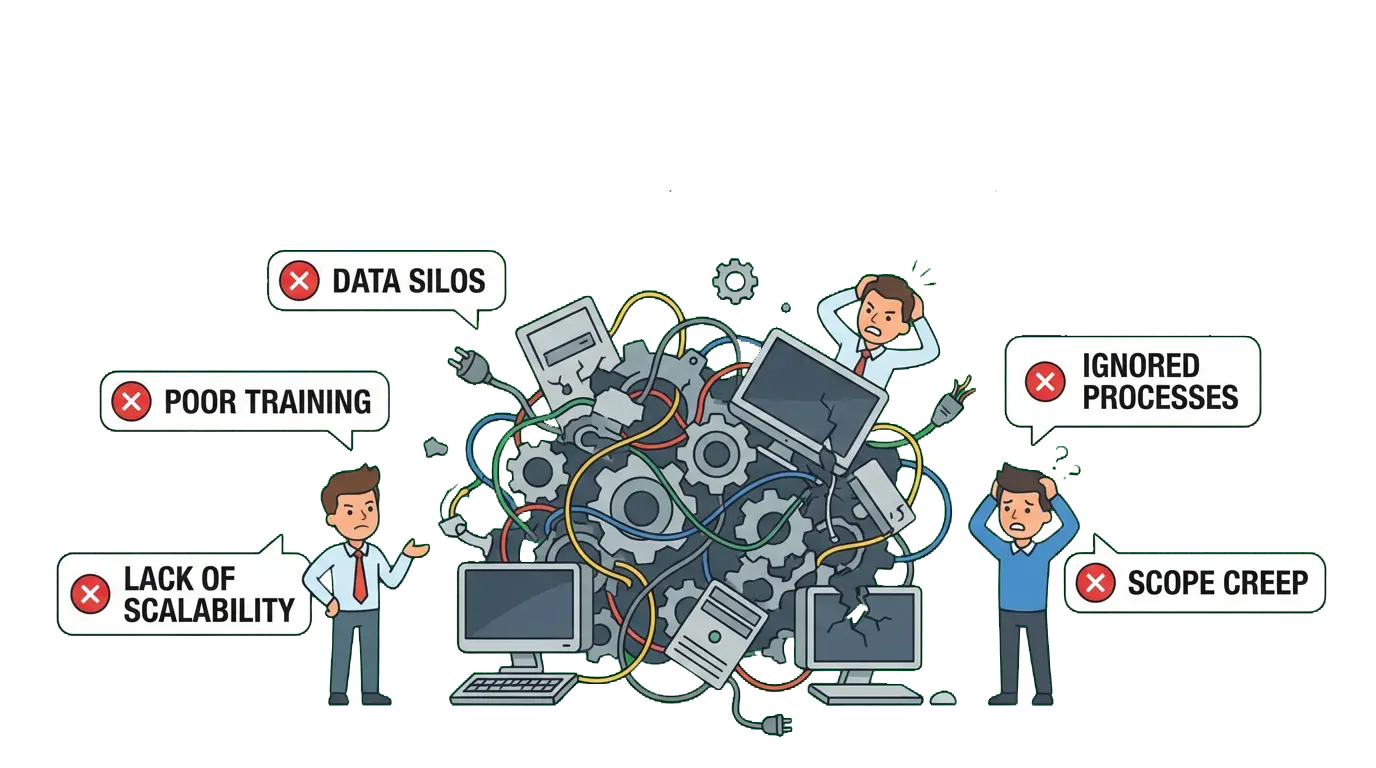
Most Common ERP System Mistakes
While ERP projects open up great opportunities, mistakes in the planning and execution phases can lead to failure. For example, incorrect analysis of proposals or insufficient team preparation leads to project delays and increased costs. Now, let’s look step-by-step at what the most common mistakes in ERP systems are and how to avoid them.

Choosing unnecessary modules
One of the most frequent mistakes made during a project is the addition of unnecessary features and modules. Sometimes, companies request functionality in advance that they think might be needed in the future. This increases implementation costs and makes managing a simple system difficult. For small and medium-sized businesses, standard modules are often sufficient.
- Re-evaluate all module requirements before starting the project. Test only with necessary functionalities.
- Add new desired functionality in stages; in the initial phase, install only the modules that affect your business the most.
Incorrect definition of requirements
One of the most widespread mistakes is proceeding to implementation without fully understanding existing business processes. If the company's core workflows are not accurately analyzed, the system may not be able to establish them. For instance, if inventory management, sales, or financial processes haven't been documented beforehand, the ERP project may not go as planned.
- Document company processes step-by-step at the start of the project. Map out the real workflow of each department.
- Unverified and unrealistic expectations can prolong the project and create additional costs.
Lack of training and support
After the ERP system is successfully deployed, team members must get used to it. Often, companies install the software but do not provide enough training to employees. In this case, users return to old methods, and the system does not work at full capacity. To maximize the benefits of ERP, team training and continuous technical support are essential.
- Train all key users before the new system goes live. Employees should practically perform important operations in the system.
- A team of experts should be constantly ready to answer technical questions throughout the development process.
Failure to pay attention to change management
An ERP project is not just software; it requires deep changes in organizational structure and working methods. Sometimes, management and employees do not fully accept the new process. Instead of working by new rules, they continue to apply the old approach. In this case, it becomes difficult to fully benefit from the ERP, and the system loses its purpose.
- Implement changes gradually and transparently. Project managers should maintain continuous contact with employees and listen to their suggestions.
- Create motivation for the team to prepare for changes and apply reward mechanisms.
Skipping the testing phase
One of the most serious mistakes is not conducting enough testing. Instead of launching the ERP directly after installation, you should implement a pilot project or a test environment. During this time, system errors should be investigated with real data, and employees should check their daily scenarios. Otherwise, problems arise as soon as the system goes live.
- Conduct large-scale testing before putting the system into operation. Find possible errors in advance.
- Different departments should test with real business data to ensure the system meets the desired requirements.
Technical integration problems
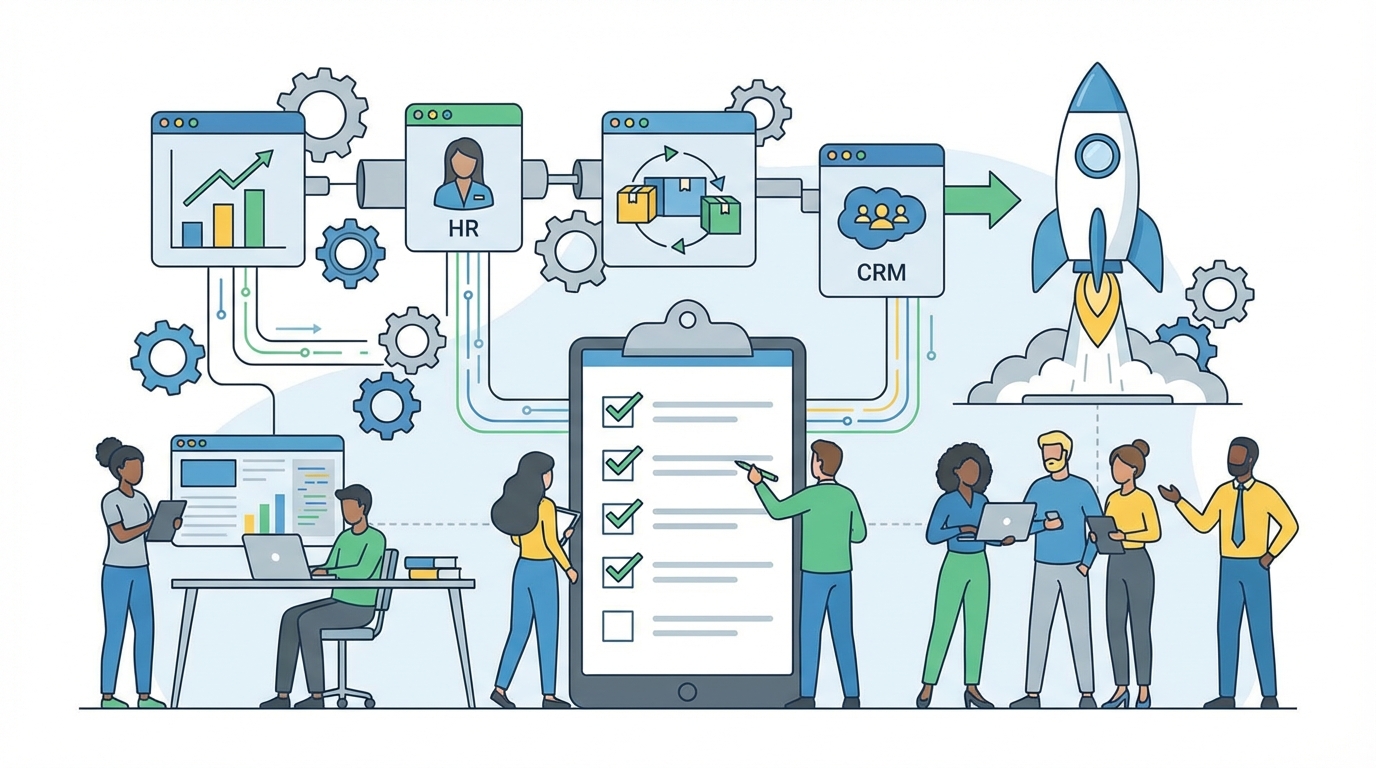
There can also be difficulties during the integration phase of the ERP system. Transferring data between old software and the new ERP takes time and requires compliance with standards. If the reporting or data system is not synchronized with the ERP, inconsistencies will appear in reports.
- Inventory all old systems and determine the data flow before starting the project.
- Test the correct operation of APIs and security parameters during development.
Short checklist ✅
- Process analysis: Document existing business processes before installing the ERP.
- Simplification: Remove modules from the project that exceed your current needs.
- Training: Provide ERP training to the team and answer their questions.
- Change management: Prepare employees for changes, listen to their opinions.
- Test: Test the system extensively before launch, eliminate all errors.
- Integration: Plan and check integration with old systems from the beginning.
- Communication: Maintain open communication between the team and management at every stage of the project.
- Risk plan: Identify project risks and plan alternative solutions.
The most common mistakes in ERP systems are made during the planning phase and in team preparation. By paying attention to these mistakes in time, it is possible to ensure the successful completion of the project. With accurately analyzed requirements, correctly selected modules, and a prepared team, you can complete your ERP project on time and within budget, optimizing your business processes and staying ahead of the competition. Remember that a proper project plan and teamwork are the keys to your success.